
About
Edward Bunting Collection Project
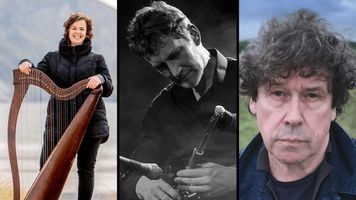
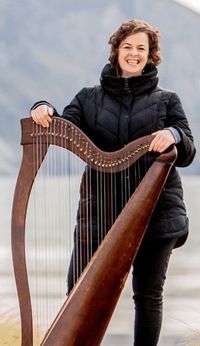
Laoise Kelly and Tiarnán Ó Duinnchinn
"Live, they carry Traditional music out of the norm into a contemplative space where the listener is freed from rigid contours and can let go with
imagination and empathy. Each of these players separately reaches back to the earliest musics in Ireland, weaving in and out of the social and artistic boundaries between indigenous Irish airs, baroque and early classical forms, and sophisticated dance music.
Together, the title of their first recording modestly understates these powers, and begs the opportunity for them to extend depth and expanse in their integration of the multifaceted characters of harp and uilleann pipes." - Fintan Vallely
When we were invited by artistic director Richard Wakely of the Belfast International Arts Festival 2021 to research, create new work from, and perform a concert of previously unheard music from the Edward Bunting (1773-1843) collection [BC], we had no idea the journey we were headed on!
The first year of research began with a residency in the Tyrone Guthrie centre for a 'deep dive'! It was only then that we realised that there were some much more than the tunes from the Harpers at the Belfast Harp festival 1792 [BHF]. Bunting collected from pipers, singers, story tellers, and he had other collectors who collected for him. So it was wonderful to fully appreciate that Bunting's very first field trip brought him to Mayo! He collected 15 tunes in Mayo in 1792. Many of these are in his first published edition, his most popular collection. He went again to Mayo in 1802, 1803 and 1810, so we have many Mayo tunes in BC.
This sparked our passion for this project further.
We know that the fall of the ancient Gaelic order in the 1600 and 1700s saw the gradual demise of the ancient traditions. Harpers adapted socially and musically to this new way of life.
The radical political and social changes in America and France in the 1770s and 1780s in the wake of the revolutions there had significant impacts on their countries, and this change, or era of enlightenment, was felt strongly in Belfast.
Belfast was leading the way in radicalism and in imagining a fresh future, inspired by these Revolutions, The United Irishmen were founded there in 1791, their aim - to secure ‘an equal representation of all the people and were in pursuit of an independent and democratic Irish republic’. These men, and women, were of Presbyterian and merchant class background.
The Belfast Harp Festival in 1792 was organised, sponsored, and supported by these enlightened Presbyterians of the city, who understood that culture can be a powerful source of harmony.
They used the harp as their symbol, proudly displayed on the masthead of their newspaper the Northern Star, and their motto was ‘It is new strung and shall be heard’, based on the idea that each string of the harp represented a distinctive component of Irish identity.
We are indebted to these men and women who were aware of the demise of the ancient harping tradition and saw to organise the great Belfast Harp Festival in 1792 and invite harpers to perform and have their music notated and preserved by Edward Bunting. Bunting was only 19 years old at the time.
This was the start of a life passion for music collecting. He published 3 volumes of music, but this comprises only a quarter of his total collection. Most of his collection is available through the Special Collections at Queen's University Belfast library. His first published collection "can fairly be described as the most seminal and influential publication in the history of Irish music".
What has been most interesting to us along this journey is how long, after initially selecting the tunes, it took for us to feel 'at home' with them. In the tradition, music transmitted by ear comes with so much more than the equivalent to a score of classical sheet music. Trad music comes, without realising it, with a weight of generations' phrasing and emphasis, that could not be scored. Something we take for granted. The music in BC manuscripts is just the bare dots, with very few classical music indications. We had to play them and play them, to find and feel the phrasing. But we also felt that these tunes, and also ourselves, needed this amount of time because they are delicate gems and we have found a passion for them. Tunes like 'The Lamentation of Deirdre for the Sons of Uisneach' needs respect and consideration. According to Derek Bell of the Chieftains, this is Ireland's oldest tune.
When it came to the first performance it was amazing to work with Stephen Rea on the narration. He brings a weight of credibility to the project. He was delighted to tell of the great Belfast Presbyterians, including the McCracken family, who Bunting stayed with from the time he was a child to when he married, 30 or more years later. Henry Joy McCracken was obviously one of great heros of the United Irishmen, but so too was his sister Mary Ann McCracken.
Since the first performance @ BIAF the performance has been perfected through many other gigs.
Since the Belfast IAF, we have performed at the Achill International Harp Festival, William Kennedy Piping Festival in Armagh, Féile Liam O'Flynn, Harps Alive Belfast, Tyrone Guthrie centre Monaghan, Westport Town Hall Theatre and Beo ó Stiúideo Cuan. In these shows, each time, we learned a little more about the tunes, the breath of the timing together, and our artistic focus was sharpened. We both have experience producing large ensembles and so we are confident we will produce a polished performance, and a recording.
We are very proud of the research, and on the work we have done on the selected music. Audience feedback to date has highlighted the wide appeal that this music, narrative and song has engendered way beyond that of the historian and harp enthusiast. Not alone are Irish Traditional musicians now playing some of the tunes we have unearthed but audiences are now drawn from many different musical tastes. This proves to us that we must pursue a recording to document our work, make it available to the wider audience who's interest we have already piqued.
The project comprises a novel idea of marrying key events in the myths and legends of Irelands cultural heritage and folklore, with narrated poetry in Gaelic and English, retelling of archival stories underscored and pervaded by the long unheard strains of centuries old music.
The project consists of 28 pieces which haven't been played since being collected. Some tunes go back in time and relate to the mythological Fiannaíocht and Ruaraiocht sagas, some were classified in 1792 as 'Ancient' or Very Ancient'!
A set of four 2/4 tunes are reimagined and interpreted as lively polkas, including one from O'Carolan. This has been a wonderful part of the process, finding new ways to play these tunes, while maintaining respect for the essence of the tune.
The story of Deirdre and the Sons of Uisneach, which was collected in Cusendall by Bunting in 1799, provides a centre piece for the album. It is the only epic saga of the Scéalta Fiannachta in the Bunting collection, making it one of the oldest recorded Irish stories. And unique in that it has descriptive pieces of music interspersed through the story, which will be narrated by actor Stephen Rea. It is a powerful piece. The story sees Deirdre and Naoise spend time in Scotland. The saga is still to be found in Scotland in place names dotted around the western Isles. Leading light of Gaidhlig singing Kathleen MacInnes has a beautifully poignant song 'Bruadar Dheirdre'. This was the perfect discovery for us to represent the Scottish part of the story.
We invited Réamonn Ó Ciaráin to translate the poetry of Deirdre that came in the BC version of the story. This will form part of Stephen's narration. This will be the first time ever all these elements of the Deirdre saga will come together in performance for the recording.
The saga of Deirdre has lasted just as long in Scotland with many place names across the western isles and the beautiful 'Bruadar Dheirdre' song that Kathleen has, and many more parts to the story not saved in Ireland.
Deirdre of the Sorrows/ Lamentation of Deirdre for the sons of Uisneach or the Deirdre saga, under many titles has inspired artists and many great writers over the ages of time, including some of Ireland's most eminent writers including W.B. Yeats, J.M. Synge, Lady Gregory and many others. There are numerous operas, novels, including work by recent writers like Vincent Woods, and Eamonn Carr. Painters including Helen Stratton 1915 have used Deirdre as a source of inspiration.
Many paintings and visual art work including by one of our mentors John B. Vallely.
There are not so many examples of this great saga performed in traditional music or recorded by traditional artists.
In 2012/2016 and 2026 Laoise and Tiarnán were awarded Colmcille touring funding and together with Kathleen and Ailean Dòmhnullach they toured twice throughout the outer Hebrides and Gaeltacht (Irish speaking areas) of Ireland.
This is a wonderful shared heritage between us, in Scotland and Ireland.
Reels - New Mown Meadow/Black Mare of Fanad/ Fred Finn's
Tiarnán Ó Duinnchinn & Laoise Kelly
Raidio na Gaeltachta Ródaí Scoil Samhradh Willie Clancy, 2017
Catherine Ogie/March of O'Sullivan Beare
Tiarnán Ó Duinnchinn & Laoise Kelly
Gradam Ceoil TG4 2020 Belfast Waterfront Hall
An example of resurrecting Catherine Ogie from manuscript- Goodman collection,...
Hop Jogs - Comb your hair and Curl it/Dusty Miller/Rocky road to Dublin
Tiarnán Ó Duinnchinn & Laoise Kelly
Celticimes Festival Albiez du Montrond 2012
Oràn na Cloiche
Kathleen MacInnes, Tiarnán Ó Duinnchinn, Laoise Kelly & Alana MacInnes
National Piping Centre, Glasgow 2017
Videos Edward Bunting Collection Project
Reviews on the Edward Bunting Project
Went to hear Laoise and Tiarnán playing in Belfast. Their research and dedication to the Bunting collection is inspiring and uplifting.
Really enjoyed their interpretation of what they gleaned from the collection. Educational lively and informative throughout.
Went to hear Laoise and Tiarnán playing in Belfast. Their research and dedication to the Bunting collection is inspiring and uplifting.
Really enjoyed their interpretation of what they gleaned from the collection. Educational lively and informative throughout.
I have always enjoyed the music that this duet makes even before their first CD « Ar Lorg na Laochra: which I launched for them.
Their new departure exploring the Bunting collection is commendable not only for their research and effort but for the
artistic and creative...
I have always enjoyed the music that this duet makes even before their first CD « Ar Lorg na Laochra: which I launched for them.
Their new departure exploring the Bunting collection is commendable not only for their research and effort but for the
artistic and creative...
Reviews
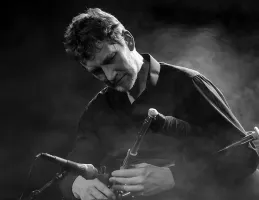
I went to see a piper I know, Tiarnán Ó Duinchinn from Monaghan, he was fantastic. But it was amazing, Way back in 1964, I was listening to Willie Clancy, in a similar situation at a fleadh in Scariff and I was weeping with emotion and I actually shed a tear when Tiarnan played as well. I thought, this is amazing.
O Duinnchinn's uilleann piping is a marvel of invention, his deftness on regulators provides contrapuntal accents and complementary coloration to his chanter playing. His chanter work is both precise and hard-charging building expertly in intensity from smolder to blaze. He is a superb player.
Ó Duinnchinn’s precise articulate playing quickly explains his many awards. His mastery of the pipes is without question and leaves no doubt about the subtleties of his musical inventiveness.
An alumunus of the vigorous Armagh Pipers Club, Tiarnan O Duinnchinn is a masterly uilleann piper, whose fineness of taste and teachnical accomplishment summon forth all the expresive magic in the music of his native Monaghan.
In his own playing, Tiarnán Ó Duinnchinn achieves a smooth, confident elegance of technique and a precision of taste and expression that result in a style full of finesse, artistry and clarity of intention. He persuades the listener that he is wholly in control of the instrument and is drawing out the richest, purest and most persuasive emotion from his repertoire.
His technical command of the instrument is most impressive, particularly in the crispness of his close-fingering ornaments. He always appears to use his remarkable technical range strictly for musical ends.
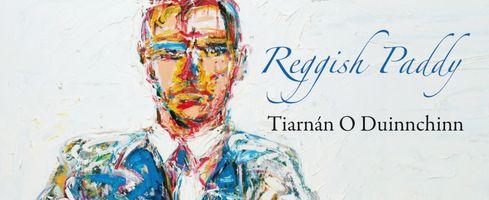
CD Reviews - Reggish Paddy - A Bunch of Regulator Keys
A piping hot musical marvel...
Ó Duinnchinn’s solo is a cracker.
Tiarnan O Duinnchinn’s new album is a revelation. His creative and inventive use of regulators has always been a mind blower for me.
... into the annals as one of the great modern piping albums.
An undoubted master of the uilleann pipes.
... an excellent debut solo CD from this outstanding piper.
Contact @
Please feel free to email about album orders, downloads, classes or concerts. Tá fearadh na fáilte romhat.